
Bloom Hub / Getting Started
How to get clients as a newly qualified beauty therapist
By Jade · October 2026 · 10 min read
You’ve passed, the certificate is on the wall, and now you’re looking at a diary with an awful lot of white space in it. If you’re trying to work out how to get clients as a newly qualified beauty therapist, you’re in very good company. Almost every business owner I’ve worked with started exactly where you are now.
In this guide
- Getting clients as a newly qualified beauty therapist starts with focus
- Build a portfolio with case studies
- Do a proper friends-and-family launch
- Use an introductory offer, not constant discounts
- Set up your Google Business Profile and get your first reviews
- Make Instagram show your work, and you
- Get involved in local Facebook groups and your community
- Partner with local businesses
- Reward referrals
- Rebook before they leave, and keep in touch
- Have a simple website with prices and online booking
- Track where your clients come from
- How long does it take to build a client base?
- A realistic first 90 days for a newly qualified beauty therapist
- Questions I get asked
Want a hand with this?
Book a free call and I’ll tell you exactly where I’d start with your business.
This is the plan I’d give a friend who’d just qualified. None of it needs a big budget. It does need a bit of consistency and some patience, because building a client base takes longer than Instagram makes it look.
Getting clients as a newly qualified beauty therapist starts with focus
The thing holding most new therapists back isn’t skill. It’s the feeling that you need to be perfect before you’re allowed to charge properly. You trained and you passed. You can be good at this and still be learning.
The second thing is trying to offer everything. A menu with 40 treatments on it quietly says “I’m not sure what I’m best at”. Pick one or two things you genuinely enjoy and want to be known for. Lash lifts and brow lamination. Gel nails with detailed nail art. Facials for sensitive or acne-prone skin. Bridal makeup.
You can still do other treatments for people who ask. But when someone in your town thinks “who does good brows round here?”, you want your name to be the answer, and that’s far easier when you’re known for one thing. If you’re still sorting out the practical side, my guide to starting a beauty business from home covers rooms, licences and set-up.
Build a portfolio with case studies
Nobody books a brow artist when they’ve never seen a single brow she’s done. Before you can market anything, you need proof of your work, and the quickest way to get it is case studies (some people call them models).
Ask people who look like the clients you want. If you want to do bridal makeup, find a couple of friends who’d love a full glam trial. If you want to do lashes, look for people with naturally straight lashes so the result really shows. Offer the treatment free or at cost in exchange for photos and honest feedback, and be clear that it’s a portfolio session so you’ll be taking your time.
Keep the feedback for your own learning, or use it on your website as a clearly labelled case study (“complimentary treatment for my portfolio”). Don’t ask case studies for a Google review in return for the free treatment. Google removes reviews posted because of an incentive, and under the CMA’s fake reviews rules, in force since April 2025, a review that hides an incentive is unlawful.
Two things to sort before the first one walks in:
- Insurance. Check your policy covers case study work and every treatment you’re offering. A quick email to your insurer settles it.
- Photo consent. Get written consent to take and use photos, and say exactly where they’ll go (Instagram, your website, Google). A short form signed on the day is plenty. Keep it with their consultation card. A photo of someone’s face is personal data, so look after it properly and take it down if they ask.
Take every photo in the same spot and the same daylight, and aim for 10 to 15 case studies on your main treatment. That’s enough for an Instagram highlight and a small gallery on your website.
Do a proper friends-and-family launch
Your first paying clients will very likely be people who already know you. Nearly every business starts that way, so don’t feel awkward about it.
The mistake is posting “I’m open, book now” once and hoping. Message people one by one instead. Something like: “I’ve just qualified in lash lifts and I’m opening my diary on the 1st. I’ve kept a few spots back for people I know before I open it up. Would you like one?” A personal message gets a much better response than a group post, because it feels like an invitation rather than an advert.
Then ask each of them to tell one friend about you, and to share or comment on your posts. Skip asking close friends and family for Google reviews: Google’s policy treats personal ties as a conflict of interest, so those reviews can be removed. Your mum’s colleagues and your sister’s gym friends are your second wave of clients, and they’re the ones whose reviews count.
Use an introductory offer, not constant discounts
A launch offer is completely fine. Endless discounting is a trap. If you become known as the cheap one, you attract people who leave the moment someone cheaper opens up, and it’s really awkward to put your prices up on them later.
A controlled offer has an end date and a limit, and you tell people why you’re running it. “20% off for my first 15 clients in March while I build my portfolio” is controlled. “20% off this week” posted every other week isn’t, and people learn to wait for it. It also stops being a genuine saving in the eyes of consumer law if the “full” price is never actually charged.
Another option is to keep your full price and add something instead, like a free brow tint with every lamination for your first month. Your price stays where it should be, and you’re not training anyone to expect money off. If you’re not sure what that full price should be, I’ve written a whole guide on how to price beauty treatments.
Set up your Google Business Profile and get your first reviews
When someone searches “lash lift near me”, the map results at the top of the page come from Google Business Profiles. It’s free, and for a local beauty business it’s one of the most useful things you can set up in your first week. If you work from home without a sign outside, you’ll normally set it up as a service-area business, which keeps your address off the profile and shows the area you cover instead.
Fill in every section you can: your primary category, treatments, prices, opening hours, a booking link, a short description and photos of your work and your space. Then focus on reviews from paying clients. Ask every one of them, not just the ones you think loved it, because Google doesn’t allow you to selectively ask for positive reviews. Send your direct review link the same day, while they’re still admiring their brows in the car mirror. Leave it a week and most people forget. Reply to every review, good or bad, in a line or two.
My guide to Google Business Profile for salons walks through the full set-up.
Make Instagram show your work, and you
For a new therapist, Instagram has two jobs. Show people what you can do, and help them feel like they know you before they book. The posts that tend to work best:
- Before and afters. Same angle, same light, no filters. Clients can spot an edited photo a mile off, and the ASA treats before and after images as claims, so a filter that exaggerates the result can make your post misleading.
- Faces. Clients (with consent) looking happy with the result. A brow on its own is fine, but a person loving their brows is better.
- Process. Short videos of the treatment, your set-up, how you prep the skin. People like seeing what actually happens behind the door, especially if they’ve never had the treatment.
- You. Your face, your voice, why you got into this. People book people, and that’s even more true for something as close and personal as lashes or a facial.
Put your location in your bio and in your captions (“lash lifts in Chelmsford”), and make it obvious how to book. A link in your bio that goes straight to your booking page beats “DM to book” every time.
You don’t need to post every day. Three good posts a week, with some stories in between, is plenty while you’re finding your feet. What matters more is answering every comment and DM quickly, because at this stage each enquiry is a potential regular.
Get involved in local Facebook groups and your community
Every town has local Facebook groups, from mums’ groups to community noticeboards. People ask for beauty recommendations in them all the time.
Read each group’s rules first, because many only allow business posts on one day a week. Use that day well: a photo of your work, a line about who you are and where you’re based, and how to book. The rest of the week, just be a normal, friendly member. When someone asks “anyone know a good nail tech near Hove?” and one of your clients tags you, that’s worth more than any ad.
Partner with local businesses
Think about who already has your ideal client in front of them and doesn’t compete with you. A few that work well:
- Hairdressers who don’t offer brows, lashes or nails
- Bridal shops and wedding venues (bridal makeup, pre-wedding facials, nails)
- Gyms, Pilates and yoga studios (massage, skin treatments, spray tans)
- Wedding and portrait photographers (makeup for shoots)
- Independent clothing boutiques
Pop in with a few cards and suggest something specific, like a voucher their clients can use with you, or a joint offer for brides booking both of you. Turning up in person works far better than a cold DM. Two or three good partners is plenty, and give each one its own code or voucher so you can see which partnership actually sends people.
Reward referrals
A happy client is the best marketing you’ll ever have, but most won’t refer you unless you give them a little nudge. Set up a simple referral reward, such as “refer a friend and you both get £5 off your next appointment”.
Mention it at the end of the appointment and pop a small card in with their aftercare. Keep the reward something that brings them back to you, like money off their next treatment, rather than cash or a gift from somewhere else.
Rebook before they leave, and keep in touch
This is the one most new therapists skip, and it makes the biggest difference. Finding a new client takes real effort. Getting an existing one to come back should be the easy part.
Before they leave, while they’re happy with the result, suggest their next appointment. “Your infills will be due in about three weeks. Shall I pop you in for the 14th?” Most people say yes, because it saves them a job later.
For anyone who doesn’t rebook, set your booking system to send a reminder when they’re due. If you’d like to send offers and news too, ask at booking with a clear opt-out. Under the PECR soft opt-in you can email or text paying clients about similar treatments, as long as you gave them the chance to opt out when you took their details and in every message after.
Ten clients who come back every month will do more for your business than thirty people who visit once. That’s what building a client base really means.
Have a simple website with prices and online booking
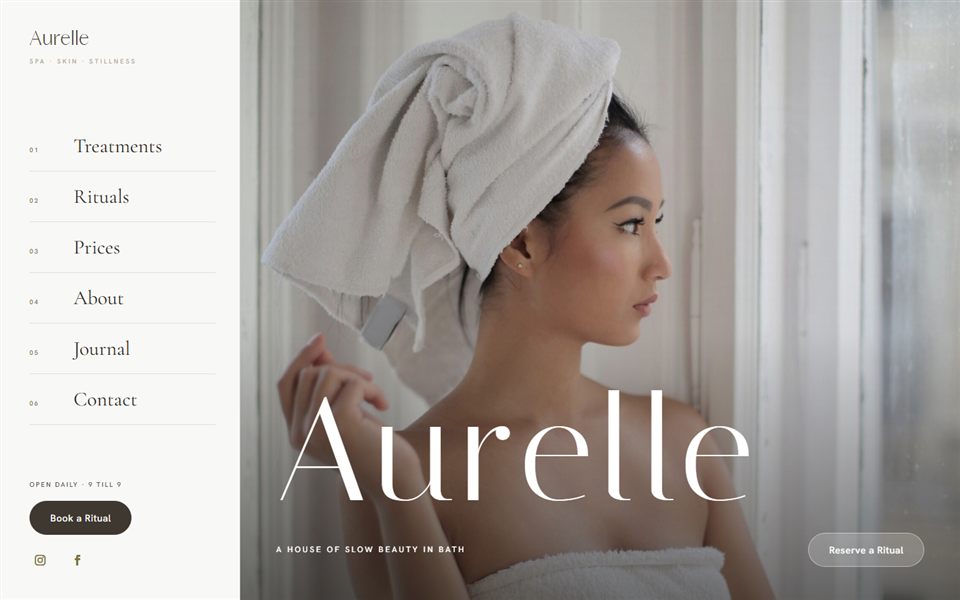
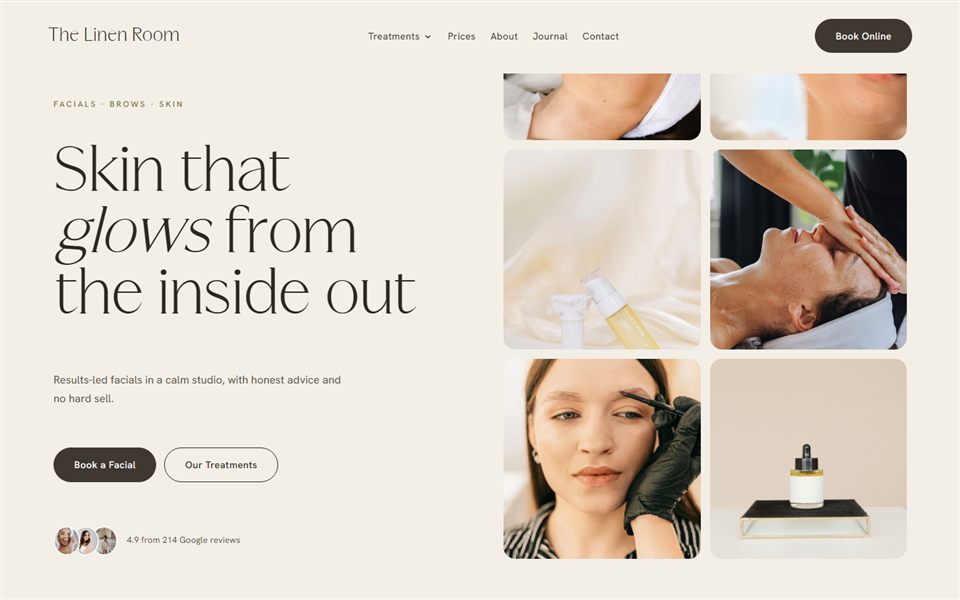
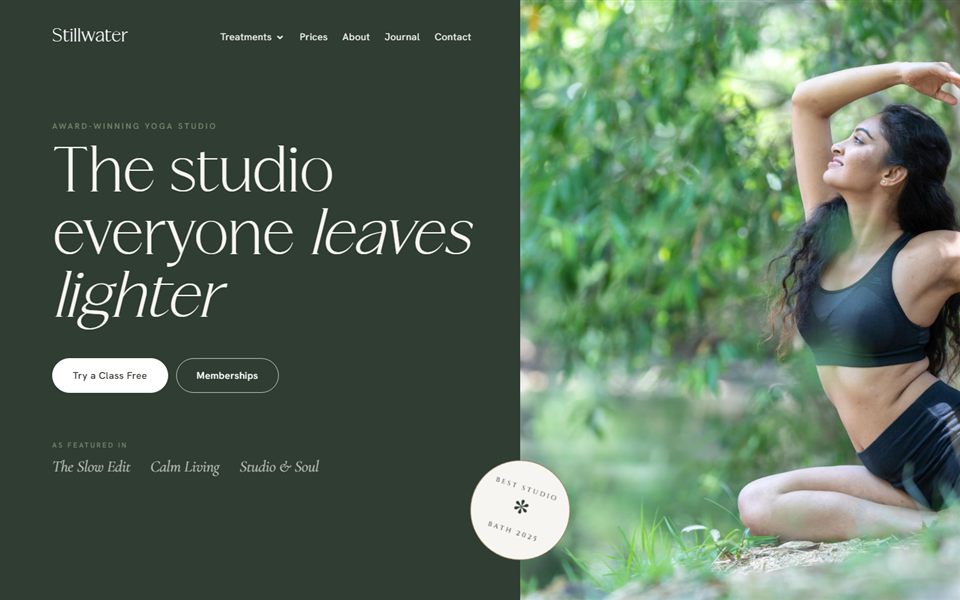
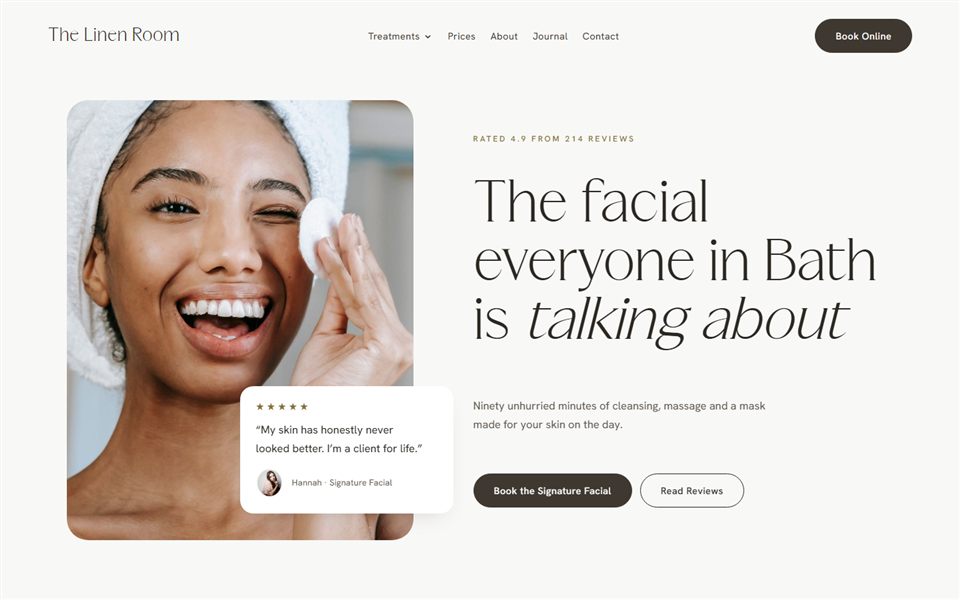
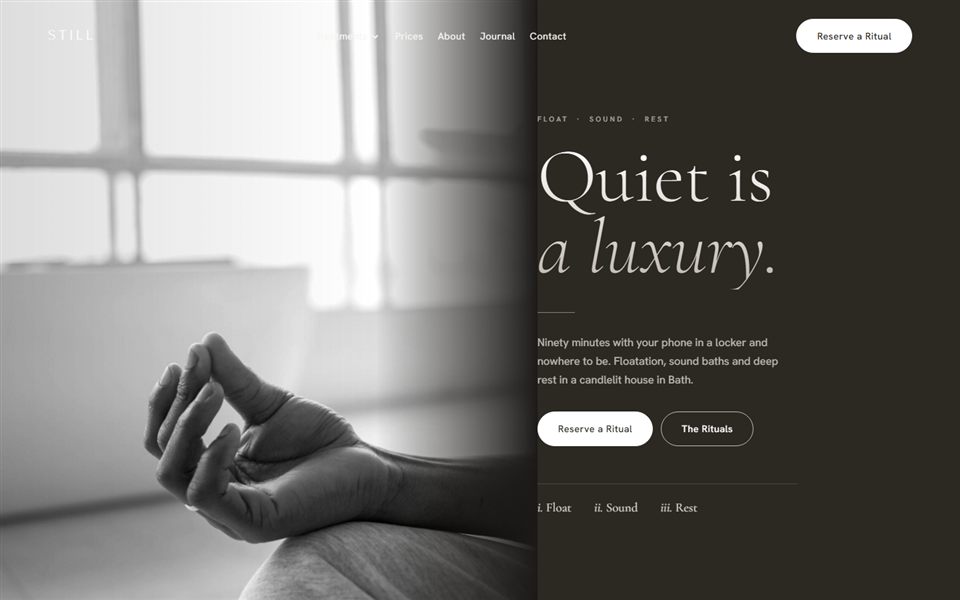
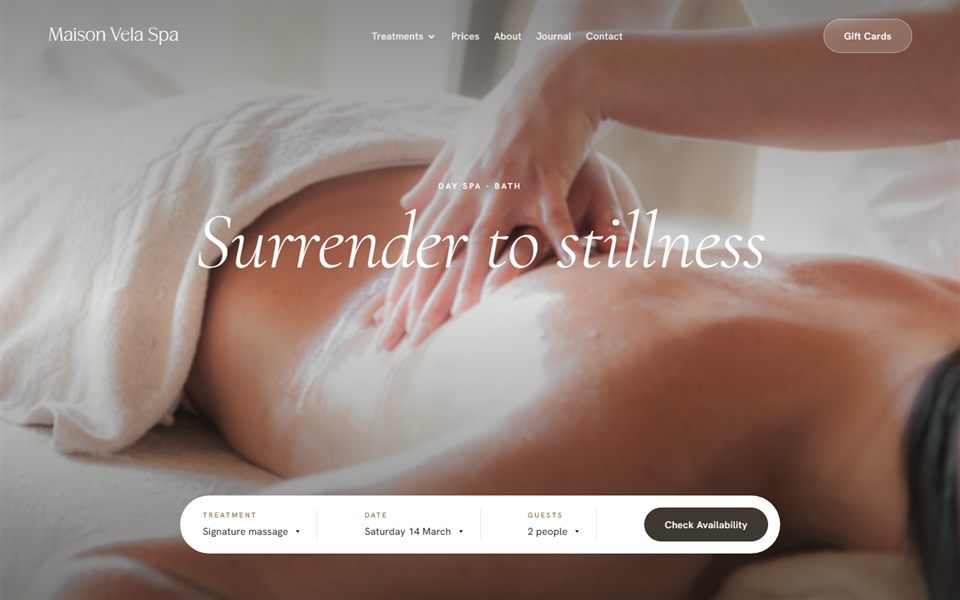
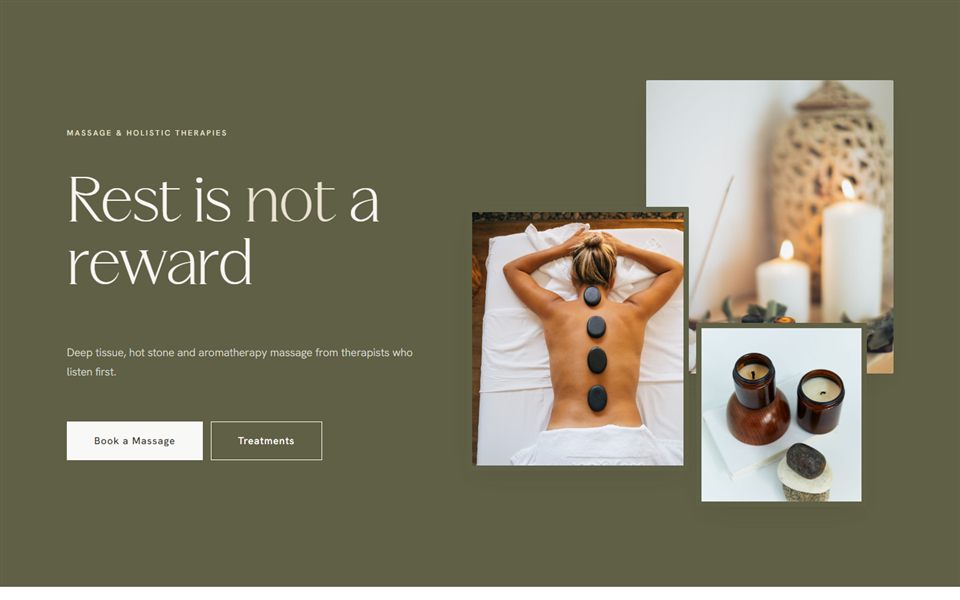
You don’t need a huge website in your first year. You need a clear one. It should show your treatments and prices, a few photos of your work, where you are, and a book now button that takes people straight to online booking.
Online booking matters more than most people think. Lots of clients book late at night on the sofa. If they have to DM you and wait for a reply in the morning, plenty of them won’t bother. Fresha, Booksy and Timely all have options that work well for solo therapists, so compare their fees and how they handle deposits before you choose.
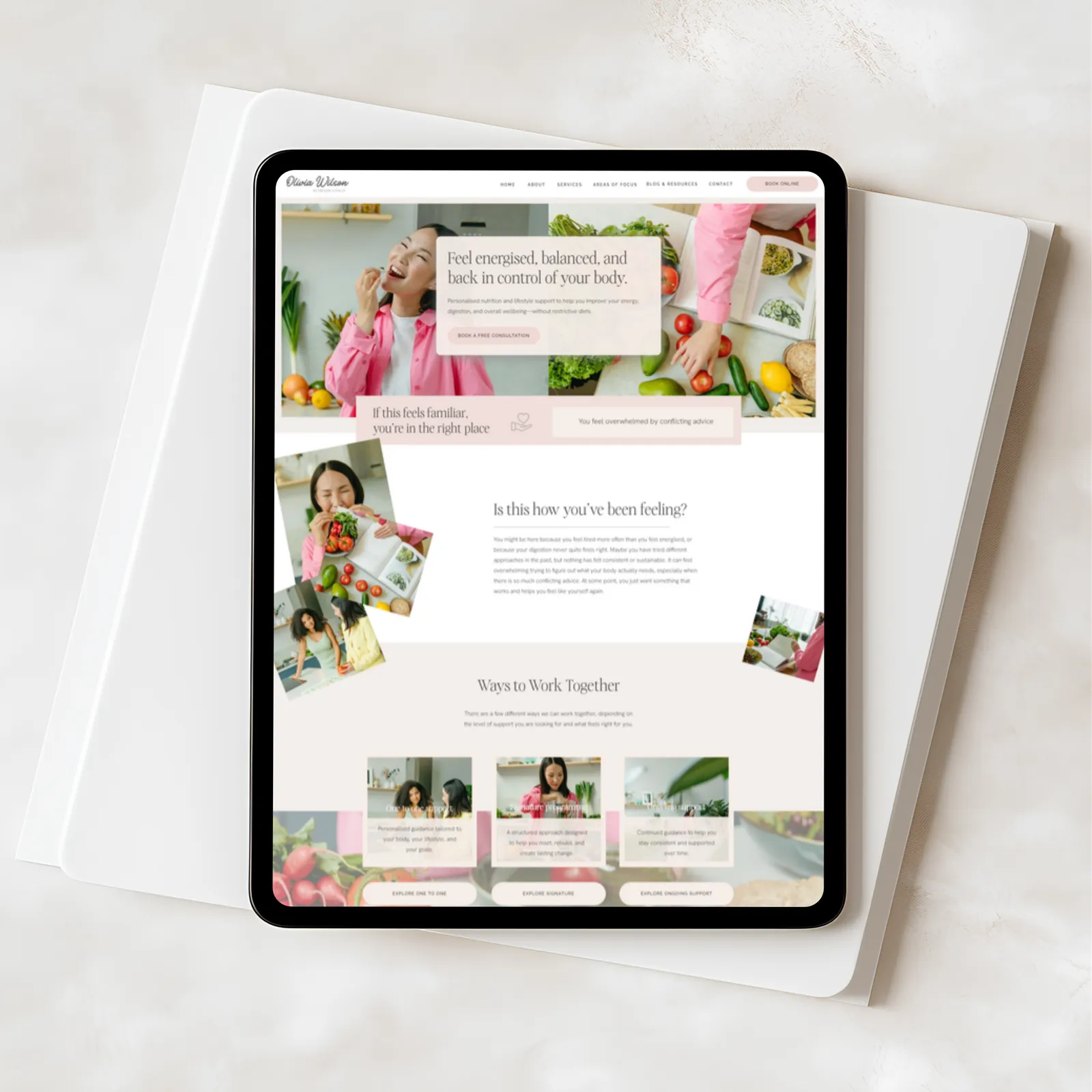
A website also helps you show up on Google over time, which Instagram can’t really do for you. If you’d rather not start from scratch, my website templates were made for this stage. When you’re ready to go live, run through my website launch checklist first.
Track where your clients come from
Ask every new client “how did you hear about me?” and write the answer down. Most booking systems have a field for it, but a note on your phone works fine. If you can, use a slightly different booking link for Instagram, Google and your website (most booking systems and website analytics can tell them apart), so you’re not relying on memory alone.
After a couple of months you’ll see patterns, like Google quietly bringing in more than the Facebook groups. That tells you where to put your time.
How long does it take to build a client base?
Honestly, longer than you’d like. From what I’ve seen with the therapists I work with, the first few months are usually a trickle of bookings and a small handful of regulars. It tends to feel steadier somewhere between six months and a year, once rebookings and referrals start filling the gaps for you.
Lashes and nails need regular maintenance, so those diaries tend to fill faster than occasional facials. Try not to compare your month two with someone else’s year five.
A realistic first 90 days for a newly qualified beauty therapist
If you want something to pin on the fridge, this is roughly how I’d split the first three months.
Days 1 to 30: proof and foundations
- Choose the one or two treatments you want to be known for
- Check your insurance and write a simple photo consent form
- Book 10 to 15 case studies and photograph every one in the same light
- Set up your Google Business Profile and an online booking system, with a marketing opt-in at booking
- Tidy your Instagram bio, add your location and a direct booking link
- Message friends and family personally to fill your first appointments
Days 31 to 60: open the diary
- Launch your introductory offer with a clear end date and a limit
- Ask every paying client (outside close friends and family) for a Google review the same day
- Post three times a week, mixing results, process and you
- Join three or four local Facebook groups and use their business days
- Visit two or three local businesses about working together
- Start rebooking every client before they leave
Days 61 to 90: build the habits that keep clients
- End the intro offer on the date you said you would
- Launch your referral reward
- Get a simple website live with prices and booking
- Look at your “how did you hear about me?” notes and do more of what’s working
- Follow up with case study clients who haven’t been back yet, with an invitation to book at your normal price
Questions I get asked
How do I get clients as a newly qualified beauty therapist with no experience?
Start with case studies. Offer free or reduced treatments to people who match your ideal client, in exchange for photos and honest feedback. That gives you a portfolio quickly. Then collect Google reviews from your paying clients, which is exactly what new clients look for before they book.
Should I work for free when I first qualify?
For a short, planned period, yes. Case studies are a normal part of building a portfolio. Set a number (10 to 15 is plenty), get photo consent from each person, and don’t make the free treatment conditional on a review. Then move on to paid appointments so free doesn’t become the norm.
How do I get more clients for my beauty business without paying for ads?
Put your energy into your Google Business Profile, reviews, referrals and rebooking. Local Facebook groups and partnerships with nearby businesses cost nothing but time. Ads can be useful later, once you know which treatments are popular, your prices are settled and you can track which bookings they bring in.
Is Instagram or Google better for finding beauty clients?
They do different jobs. Google catches people already searching for a treatment near them, so they’re often ready to book. Instagram helps people get to know you and see your work. Most new therapists need both, with a clear booking link on each.
How many clients does a beauty therapist need to make a living?
There’s no single number, because it depends on your prices, your costs and how many hours you want to work. Work backwards: decide what you need to earn each month, divide it by what you make per appointment after costs, and you’ll see how many appointments a week you need. Regulars who rebook make that number much easier to hit.

Written by Jade
Founder of Design With Bloom. Designing elevated websites for beauty and wellness brands, with 10 years in marketing behind every detail.
Keep reading
More from the Bloom Hub
Just qualified?
Ready to bloom?
If you want a website that looks the part from your very first booking, there’s a template here that fits where you are now and grows with your client list.