
Bloom Hub / Marketing
How to market an aesthetics clinic without breaking the rules
By Jade · October 2026 · 10 min read
Aesthetics is one of the trickiest areas of beauty to market. Your most popular treatment is one you’re not allowed to advertise, the rules are spread across several regulators, and plenty of clinics are getting it wrong on Instagram every day. If you’ve been wondering how to market an aesthetics clinic properly, this is the guide I wish more of my clients had read first.
In this guide
- Botox advertising rules in the UK: the short version
- What you can promote
- Dermal fillers, under-18s and the licensing scheme
- How to market an aesthetics clinic: start with trust
- Build a consultation-led funnel
- Marketing an aesthetics clinic starts with your website
- Local SEO and reviews for aesthetic clinic marketing in the UK
- Email and SMS to existing clients
- Educational social content
- Referrals and partnerships
- Google Ads and Meta ads for clinics
- Questions I get asked
Want a hand with this?
Book a free call and I’ll tell you exactly where I’d start with your business.
I’ll start with what you can’t do, because it shapes everything else. Then we’ll get to the good part, which is that there’s a lot you can do, and the clinics who do it well tend to look far more trustworthy than the ones cutting corners.
A quick note before we start: this is general information from someone who markets clinics, not legal advice. Rules and guidance change, so always check the latest position on CAP’s Advice Online, use CAP’s free copy advice service, or speak to a specialist if you’re unsure.
Botox advertising rules in the UK: the short version
Botulinum toxin (Botox, Azzalure, Bocouture and the rest) is a prescription-only medicine. In the UK you can’t publish an advertisement that’s likely to lead to the use of a prescription-only medicine. That comes from regulation 284 of the Human Medicines Regulations 2012, and it’s mirrored in rule 12.12 of the CAP Code, which the Advertising Standards Authority enforces.
It doesn’t matter that a doctor, nurse or dentist is the one doing the injecting. It doesn’t matter that the treatment is safe in the right hands. The product is a prescription medicine, so the advertising ban applies.
In January 2020 the ASA and CAP published an enforcement notice on botulinum toxin ads on social media, because so many clinics were breaking the rule there. It’s worth reading in full, but here’s what it means in practice:
- Paid ads and your ordinary organic posts, stories and reels. A post on your own clinic page counts as advertising.
- Influencer content and anything you pay for or gift in exchange for a mention.
- Hashtags like #botox or #antiwrinkle on your promotional posts.
- Made-up names that are clearly about the medicine, like “Beautox” or “Baby Botox”.
- Indirect terms such as “wrinkle-relaxing injections” or “anti-wrinkle injections” when they’re paired with prices, offers or promotional claims. Swapping the word doesn’t change what you’re promoting.
- Botox parties, competitions, giveaways and prize draws where the treatment is the prize.
The same rule applies beyond social media, including your website, emails, leaflets and posters. The ASA can refer persistent offenders to the MHRA, which enforces the medicines advertising rules, and a breach can also become a fitness to practise matter with your professional regulator.
What you can promote
There’s still plenty to work with. Broadly, you can promote:
- Consultations. You can invite people to book a consultation to talk about their concerns, like lines and wrinkles, without naming or implying a prescription medicine as the outcome. The consultation is the product.
- Your clinic. The space, the experience, how you look after people, your aftercare.
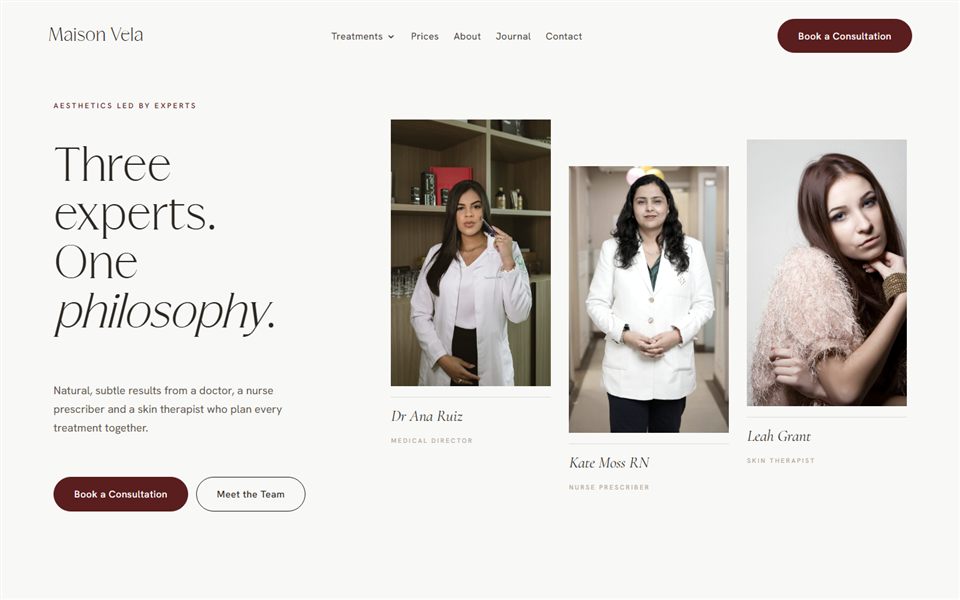
- Your practitioners. Medical qualifications, professional registration, experience and training. This is one of your strongest marketing tools.
- Treatments that aren’t prescription-only. Skin treatments, chemical peels, microneedling, skin boosters that aren’t POMs, skincare ranges, laser and so on. These still need to follow the normal advertising rules, but you can show them, price them and talk about results you can evidence.
- Education. Content that explains ageing, skin health or what to expect from a consultation, as long as it isn’t a back door into promoting the medicine.
The test I use with clients is simple. If someone reading the post would reasonably come away thinking “they’re selling Botox”, it’s probably a problem.
Dermal fillers, under-18s and the licensing scheme
Dermal fillers aren’t prescription-only medicines, so the Botox advertising ban doesn’t apply to them. You can advertise filler treatments, but the usual rules on honest, evidenced claims still apply, and CAP rule 12.25 means ads for cosmetic interventions mustn’t be targeted at under-18s, either in where they appear or in how they’re pitched. The ASA’s guidance on cosmetic interventions covers this.
The other thing that catches clinics out is urgency. The ASA’s social responsibility guidance says people need time to think before committing to a cosmetic procedure, and in 2025 it ruled against several clinics for Black Friday style, time-limited filler offers. Leave countdown deals, and claims that play down risk, out of your filler marketing.
Separately, the Botulinum Toxin and Cosmetic Fillers (Children) Act 2021 made it an offence in England to give botulinum toxin or fillers for cosmetic purposes to anyone under 18, or for a business to arrange it. Check photo ID at consultation for anyone who could be under 25, and record that you did.
A licensing scheme for non-surgical cosmetic procedures is also planned for England. The Health and Care Act 2022 gave the government the power, and in August 2025 it published its response to the consultation: the highest-risk procedures are to be restricted to qualified healthcare professionals working for CQC-registered providers, with local authority licensing for lower-risk treatments and age restrictions to follow. As I write this, none of it is in force and no start dates have been set, so check gov.uk rather than relying on anything you’ve read on social media. When it lands, being able to show you’re licensed will become a trust signal in its own right.
How to market an aesthetics clinic: start with trust
Once you know the boundaries, the marketing itself becomes much clearer. People booking aesthetics are nervous. They’re letting someone inject their face. Before price, before offers, they want to know they’re safe. So almost everything I do for clinics is about trust.
Things that build it:
- Medical credentials, front and centre. If you’re a nurse prescriber, a doctor or a dentist, say so clearly, with your registration (NMC, GMC, GDC) and a link people can use to check it. Don’t bury it on the about page.
- Independent accreditation. Membership of a register accredited by the Professional Standards Authority, such as Save Face, gives nervous clients an outside check that isn’t just your word.
- Insurance and training. Mention that you’re insured for the treatments you offer and list relevant advanced training, with dates.
- A proper prescribing process. GMC guidance says doctors must see the patient in person before prescribing injectable cosmetic medicines, and the GDC takes the same view. Explaining that your prescriber always assesses clients face to face reassures people and sets you apart from clinics that don’t.
- Real faces. Photos of you and your team in your actual clinic. Stock photos of models make clinics look interchangeable.
- Clear aftercare and complication policies. Saying who to contact out of hours, and what happens if something isn’t right, is reassuring, not scary.
Before and after photos
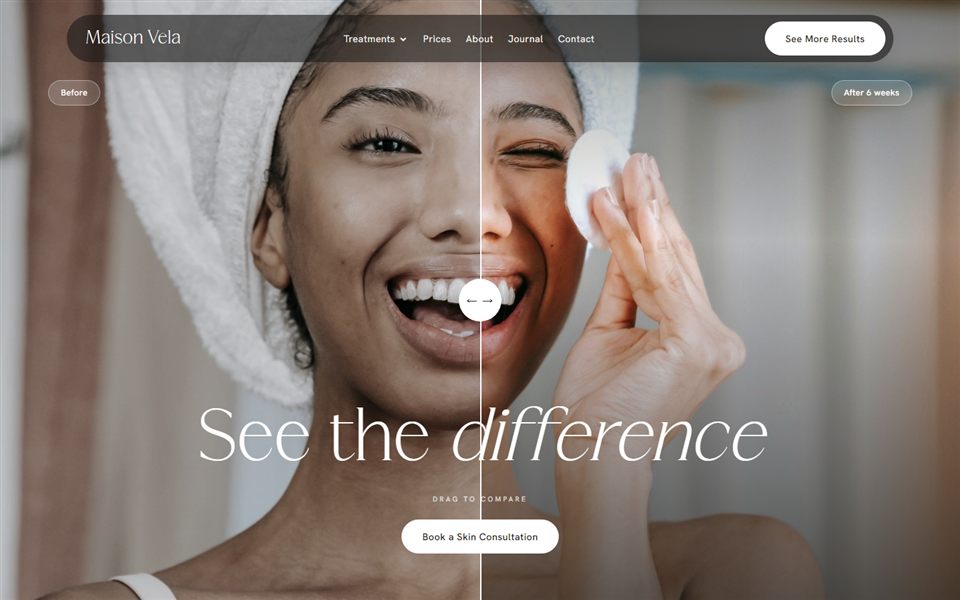
Before and afters are powerful, and they’re also where clinics get caught out. For any treatment you do show, they need to be genuine (your own client, your own work), unedited (no filters, retouching or lighting tricks that change the result), consented in writing for that specific use, and representative of what a typical client can expect. Take them in the same light, at the same angle and distance, and note how long after treatment the “after” was taken. Don’t pair them with claims you can’t back up, like “takes 10 years off”.
For anti-wrinkle injections specifically, keep before and afters off your public social media, website and ads entirely, because they’re very likely to be read as promoting the medicine. Showing them during a private consultation is a different situation.
Build a consultation-led funnel
The rules actually push you towards something that works better anyway: leading with the consultation rather than the treatment.
Instead of “Book anti-wrinkle injections, £180”, your marketing says “Worried about lines and wrinkles? Book a consultation with our nurse prescriber.” The consultation is where you assess the client, talk through options (including ones that aren’t injectable), take consent and recommend a plan. That’s also how a responsible prescriber is supposed to work.
Some clinics charge a consultation fee and redeem it against treatment, which cuts no-shows. Others offer it free. Either can work. What matters is that booking is easy, enquiries get a reply the same day, and people who don’t book on the day get a helpful follow-up. Track how many consultations become treatment plans, because a low number usually points to the consultation, not the marketing.
Marketing an aesthetics clinic starts with your website
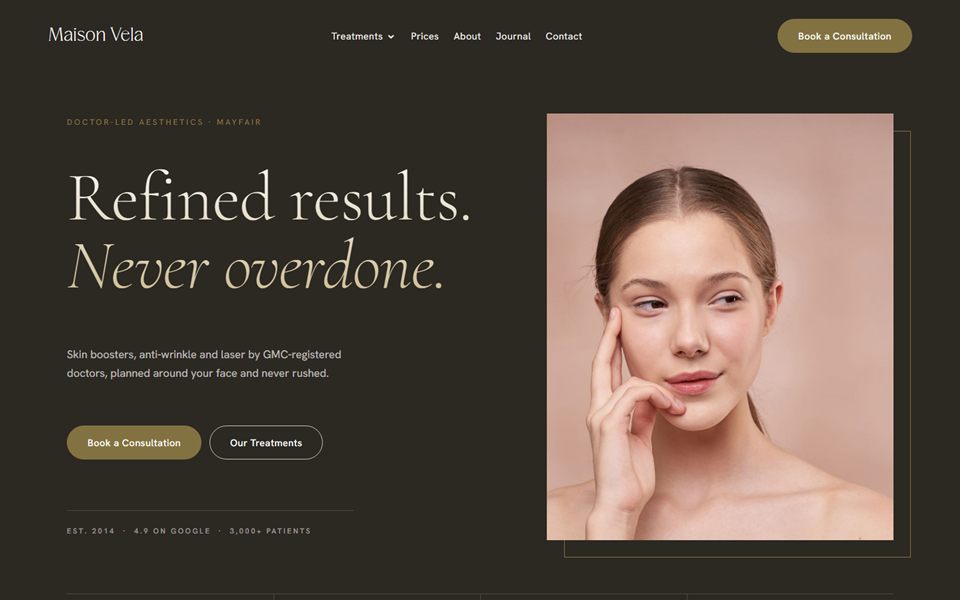
Your website is the one place where you control everything, and it’s often the deciding factor for nervous clients. A good aesthetics website has:
- A page for each treatment or concern, written in plain English, covering what it is, who it suits, how it feels, risks, downtime and aftercare.
- Concern-led pages (“lines and wrinkles”, “skin texture”, “volume loss”) that lead to a consultation, which also keeps your Botox-related content on the right side of the rules.
- Proper FAQs on each page. These answer the questions people are too shy to ask, and they help with Google too.
- Your practitioners’ credentials, with photos.
- Online consultation booking that works easily on a phone.
Remember the website is advertising as far as the ASA is concerned, so the same rules on prescription-only medicines apply there. Treatment pages can be informative without becoming promotional: no prices, offers or results images for anti-wrinkle injections.
Local SEO and reviews for aesthetic clinic marketing in the UK
Most aesthetics clients look for someone near them. Searches like “skin clinic near me” or “aesthetics clinic Leeds” are where a lot of your new clients start, and that’s local SEO.
The basics: a fully completed Google Business Profile with the most accurate primary category, photos, opening hours and services (worded within the rules), your clinic name, address and phone number consistent everywhere online, and treatment pages that mention where you are. My guide to getting found on Google locally goes through it step by step.
Reviews matter even more here than in most beauty businesses, because trust is everything. Ask every client as part of your normal aftercare, make it easy with a direct link, and reply to every review without confirming any treatment details, because a reply is public and your duty of confidentiality still applies. A review that mentions how calm and thorough the consultation was will do more for you than any ad. Google’s review policy doesn’t allow incentives or only asking the clients you expect to be happy, and since April 2025 fake reviews and hidden incentivised reviews have been banned outright under the Digital Markets, Competition and Consumers Act, as the CMA’s guidance explains. There are more ideas in my post on getting more Google reviews.
Email and SMS to existing clients
Your existing clients are your best source of rebookings and referrals, and they already trust you. A message a few days after treatment asking how they’re getting on (and for a review) works well. So does a reminder when they’re likely to be due a review appointment. Automate both so they go to every client, not just when you remember.
Two things to watch. First, the PECR rules on email and text marketing. You can market to existing clients about similar services under the “soft opt-in” if you collected their details during a booking and gave them a clear chance to opt out at that point and in every message. For anyone else you need consent, so add a clear, unticked opt-in to your enquiry and consultation forms and keep a record. Genuine service messages, like appointment reminders, aren’t marketing. Second, the prescription-only medicine rules still apply in a client’s inbox. A text saying “20% off Botox this month” is still an ad for a POM, even to an existing client. Keep it to “you’re due a review appointment” and let the clinical conversation happen in the clinic.
Educational social content
Social media is still worth doing well. It just needs to look different from a typical salon feed. Content that tends to work for clinics, and stays within the rules:
- Skin education: SPF, retinol, what causes pigmentation, how skin changes with age.
- Non-POM treatment results with genuine before and afters.
- Meet the team, behind the scenes, how you sterilise and prepare.
- What happens at a consultation, start to finish.
- Answering common questions about safety, recovery and choosing a practitioner.
Educating people about why they should choose a qualified medical practitioner is completely fair game, and it’s some of the most effective content you can post. Just keep it factual rather than fear-led, and don’t play on insecurities about appearance.
Referrals and partnerships
Word of mouth is huge in aesthetics, because people want a recommendation from someone they trust before they let anyone near their face. A referral reward can work well, as long as it isn’t a discount on a prescription-only treatment. Credit towards skincare, a facial or a peel is a safer option.
Local partnerships work too. Hairdressers, high-end boutiques, bridal shops and personal trainers often have clients who’d be interested in skin treatments.
Google Ads and Meta ads for clinics
Paid ads can work for clinics, but they come with their own restrictions on top of UK law. Google’s healthcare and medicines policy doesn’t allow prescription drugs to be promoted in UK ads or on the landing pages they send people to, so campaigns built around Botox keywords are likely to be disapproved even before you get to the ASA. Meta’s health and wellness policy requires ads for cosmetic procedures to be targeted at people aged 18 or over, and restricts messaging that plays on how people feel about their appearance.
What tends to work is advertising consultations, skin treatments and the clinic itself, sending people to a concern-led landing page that is itself compliant. Keep the wording careful, set your age targeting to 18+, avoid countdown-style offers, and keep an eye on disapprovals.
Questions I get asked
Can I advertise Botox on Instagram in the UK?
No. Botulinum toxin is a prescription-only medicine, and the ASA’s enforcement notice makes clear that the ban covers organic posts, stories, paid ads and influencer content on social media. You can promote consultations for lines and wrinkles, your practitioners and your clinic instead.
How do I advertise anti-wrinkle injections without breaking the rules?
You promote the consultation, not the injection. Talk about the concern (lines and wrinkles), invite people to book a consultation with a qualified practitioner, and leave treatment options for the consultation itself. Avoid prices, offers, nicknames like “Beautox” and hashtags that point to the medicine.
Can I post before and after photos of Botox?
Not on public channels, including your website. They’re very likely to be seen as promoting a prescription-only medicine. Before and afters for non-POM treatments like peels or skin treatments are fine, as long as they’re genuine, unedited, consented and representative.
Can I advertise dermal fillers in the UK?
Yes, fillers aren’t prescription-only medicines, so the Botox advertising ban doesn’t apply. Your ads still need to be honest and evidenced, mustn’t be targeted at under-18s and shouldn’t pressure people with time-limited deals. It’s also illegal to give fillers for cosmetic reasons to anyone under 18 in England.
What is the best way to market an aesthetics clinic?
Lead with trust and consultations. Make your practitioners’ credentials obvious and checkable, build a clear website with treatment and concern pages, get strong local SEO and reviews in place, and keep in touch with existing clients through automated aftercare and rebooking messages. It’s slower than a flashy offer, but it builds a client list that stays.

Written by Jade
Founder of Design With Bloom. Designing elevated websites for beauty and wellness brands, with 10 years in marketing behind every detail.
Keep reading
More from the Bloom Hub
For aesthetics clinics
Ready to bloom?
A clinic website that builds trust, stays within the rules and makes booking a consultation easy. Browse the templates or tell me about your clinic.