
Bloom Hub / Build With Bloom
Template vs bespoke: which is right for you?
By Jade · October 2026 · 7 min read
Choosing between a template and a bespoke website comes down to five things: your budget, your timeline, how unusual your business model is, how ready your content is and where you’re planning to grow. A template suits a business with a fairly standard shape that wants to launch sooner and manage things itself. Bespoke suits a business whose model, audiences or brand don’t fit a ready-made structure. What it isn’t really about, in my view, is how long you’ve been in business.
In this guide
- What’s the difference between a template and a bespoke website?
- Why I don’t decide by how established you are
- Budget: what can you sensibly spend?
- Timeline: how soon do you need it?
- How unusual is your business model?
- Content readiness: do you have your words and photos?
- Growth plans: where is the business going?
- Template or bespoke: a quick way to decide
- Questions I get asked
Want a hand with this?
Book a free call and I’ll tell you exactly where I’d start with your business.
In short
- A template is a finished design you make your own. Bespoke is designed from a blank canvas around your business.
- Decide on budget, timeline, how unusual your business is, content readiness and growth plans.
- There are in-between options too: a template with paid setup support, or a template you grow with extra sections later.
What’s the difference between a template and a bespoke website?
A website template is a ready-made design. The structure, layouts and styling are done, and you replace the placeholder words and images with your own. A bespoke (or custom) website is designed from scratch around your business, your clients and your brand.
Here’s how that looks with Bloom specifically, so you can see the real difference rather than a generic one:
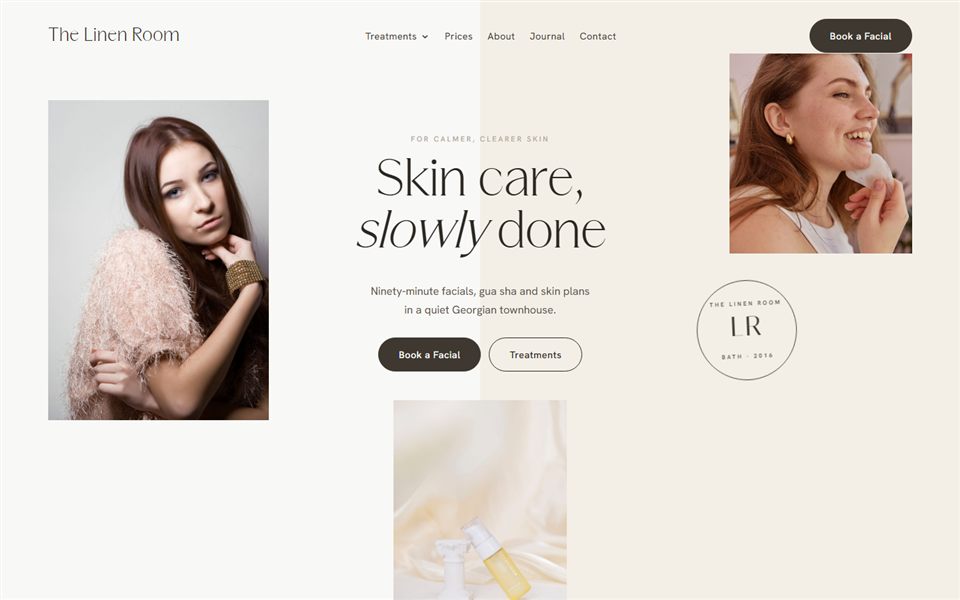
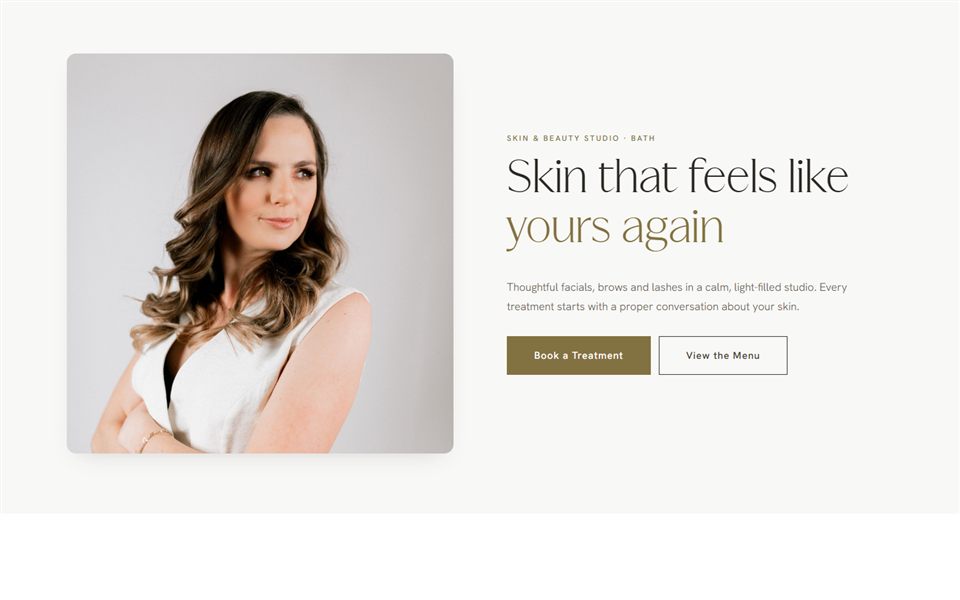
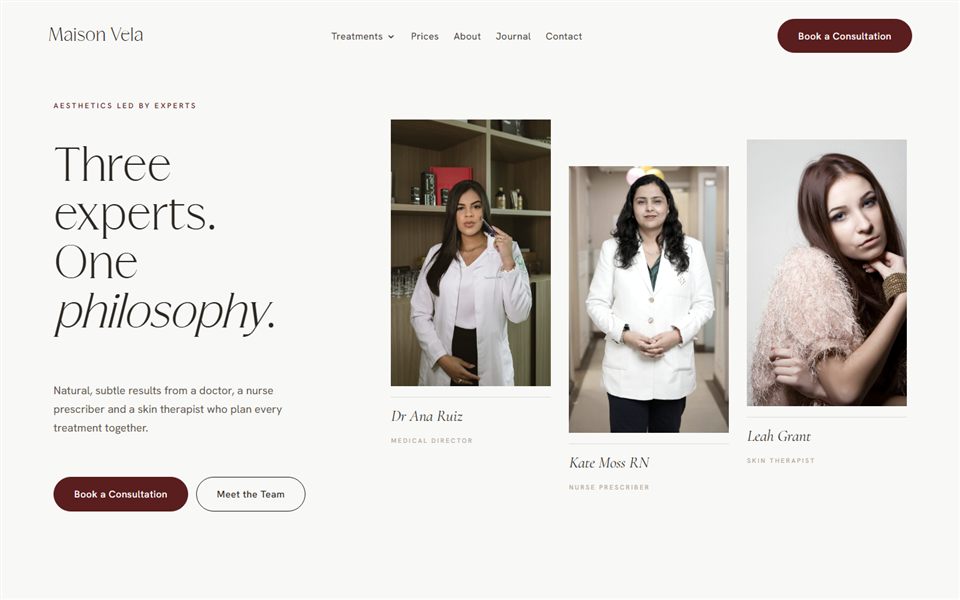
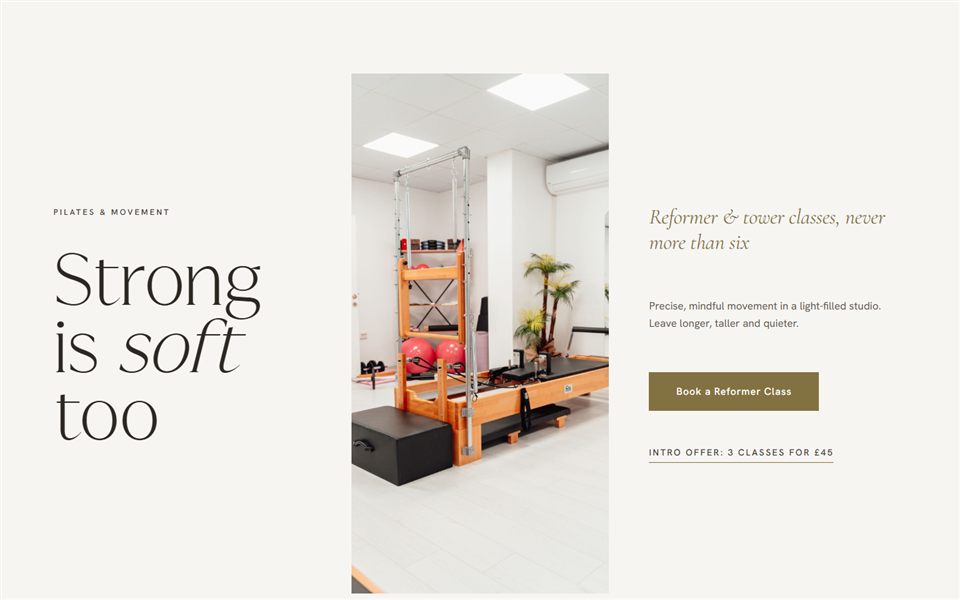
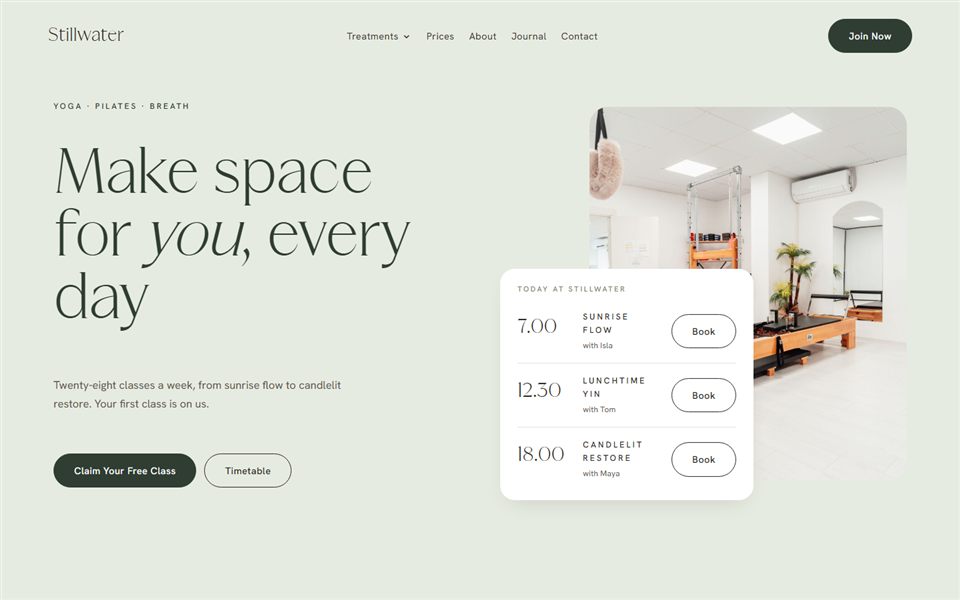
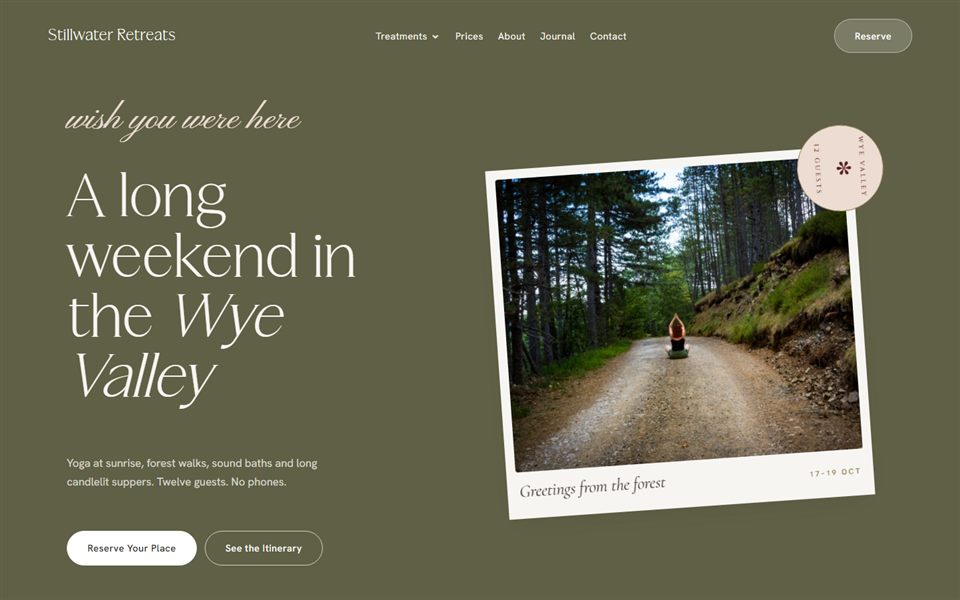
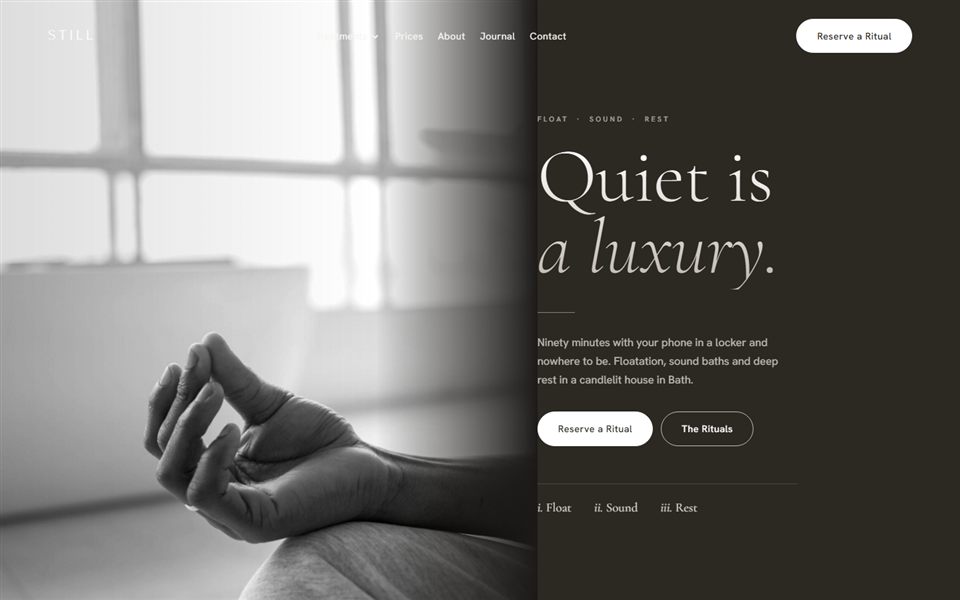
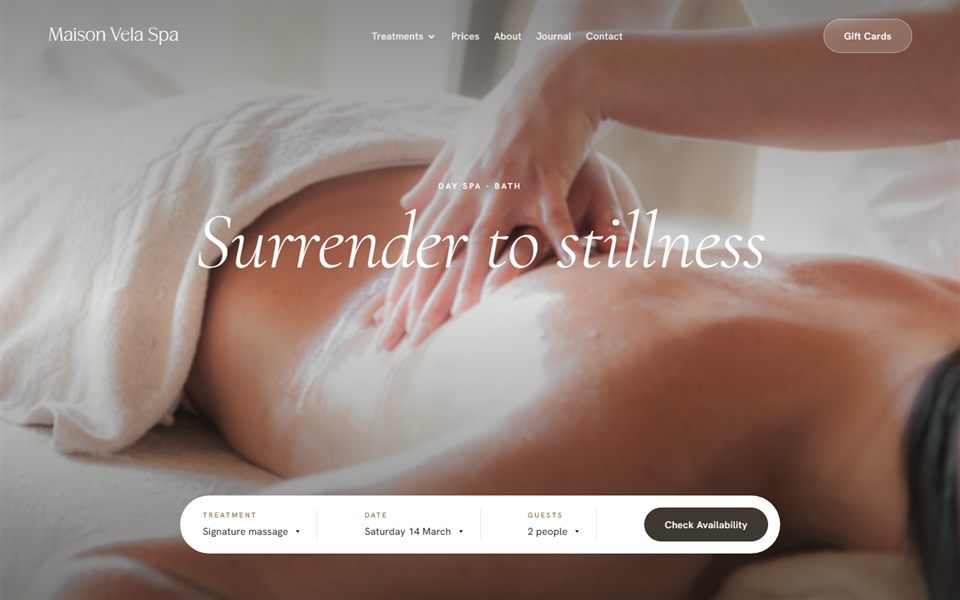
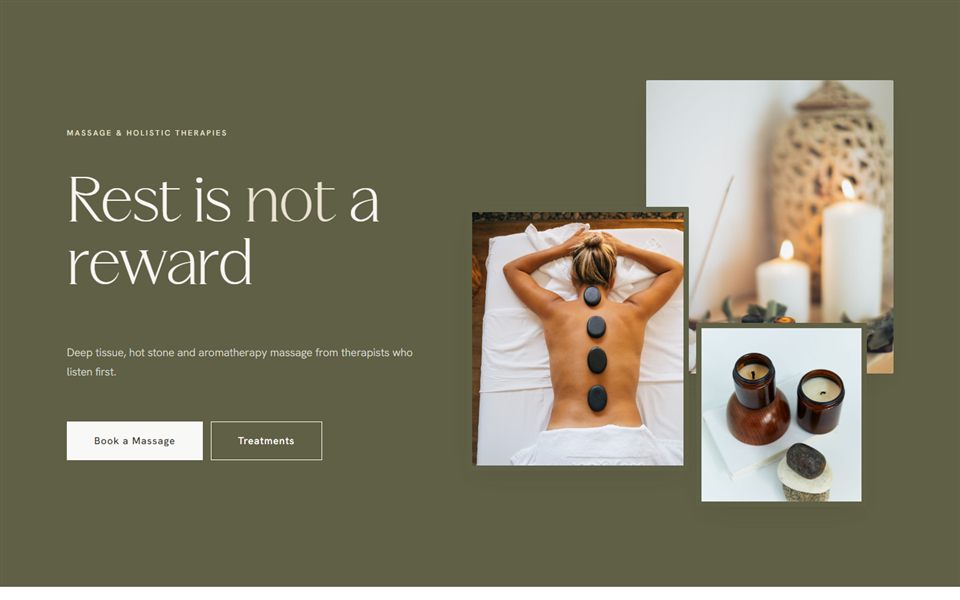
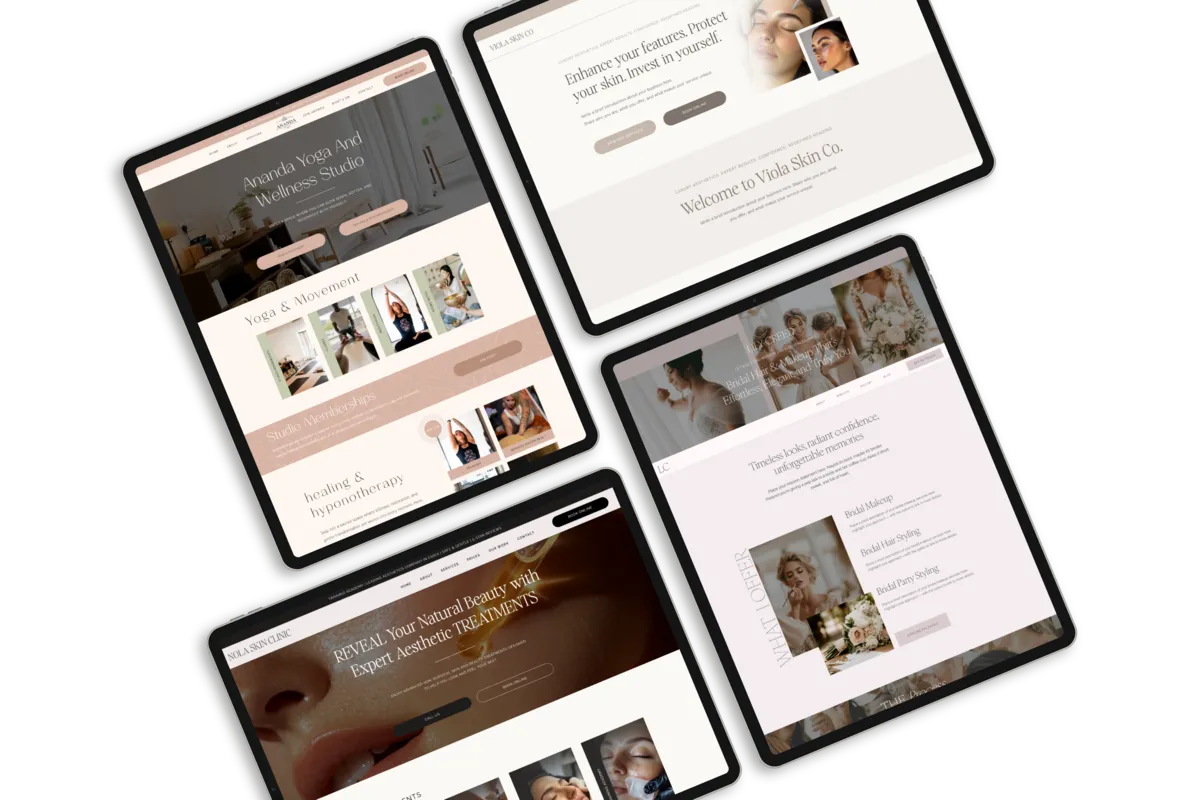
- Bloom templates are complete, ready-made Divi 5 websites for particular types of beauty and wellness business. You customise them yourself with a full video learning library, and you can add paid onboarding and setup support if you’d like hands-on help. More on that in what is a Bloom template.
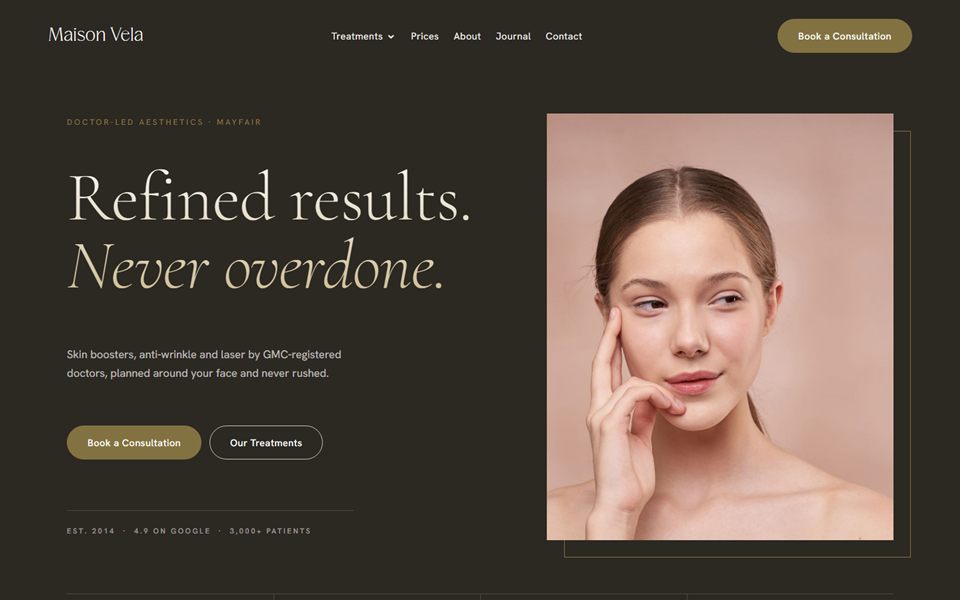
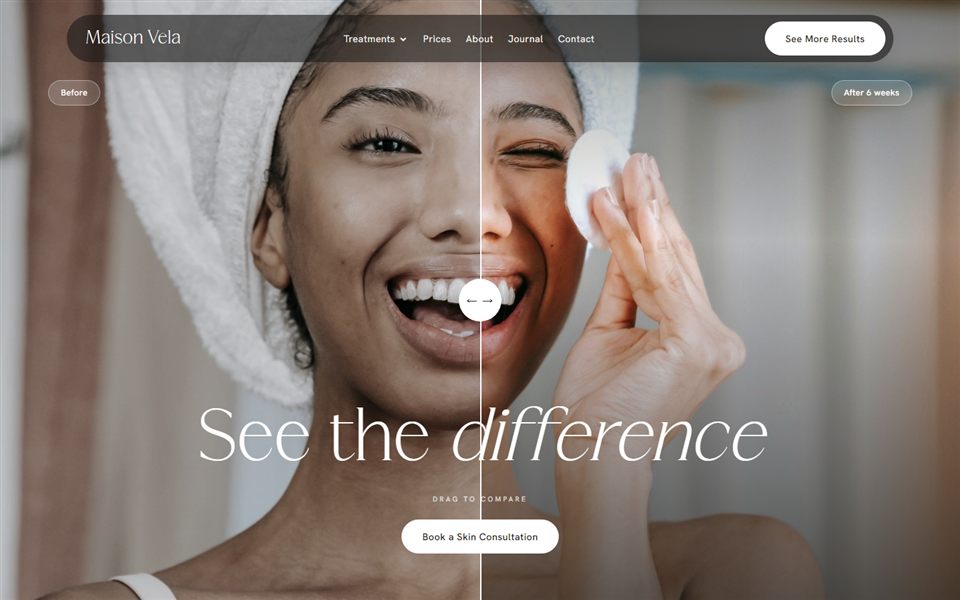
- Bespoke websites are custom designs on Divi 5, from a blank canvas. We go through discovery, strategy and direction, design, build, then launch and handover, with training so you can manage the site yourself.
Both run on WordPress with Divi 5, and with both you can update your website yourself once it’s live. So the choice isn’t between a “proper” website and a lesser one. It’s about how much of the design needs to be shaped around you.
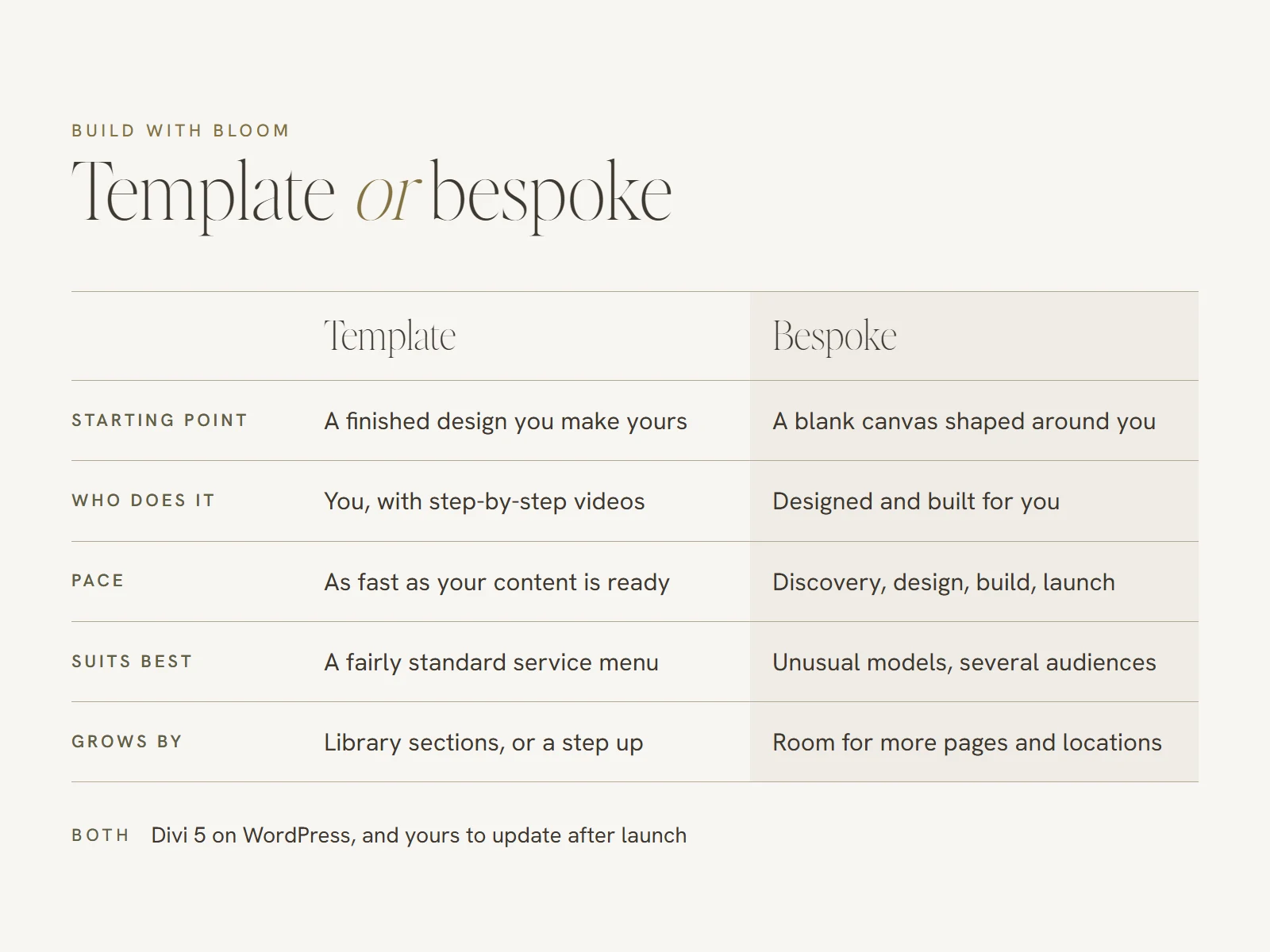
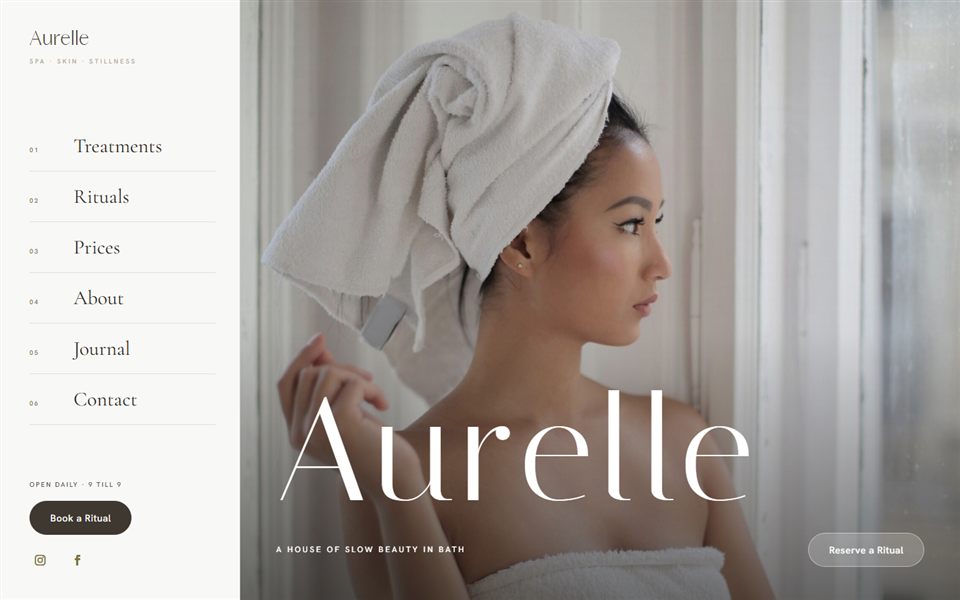
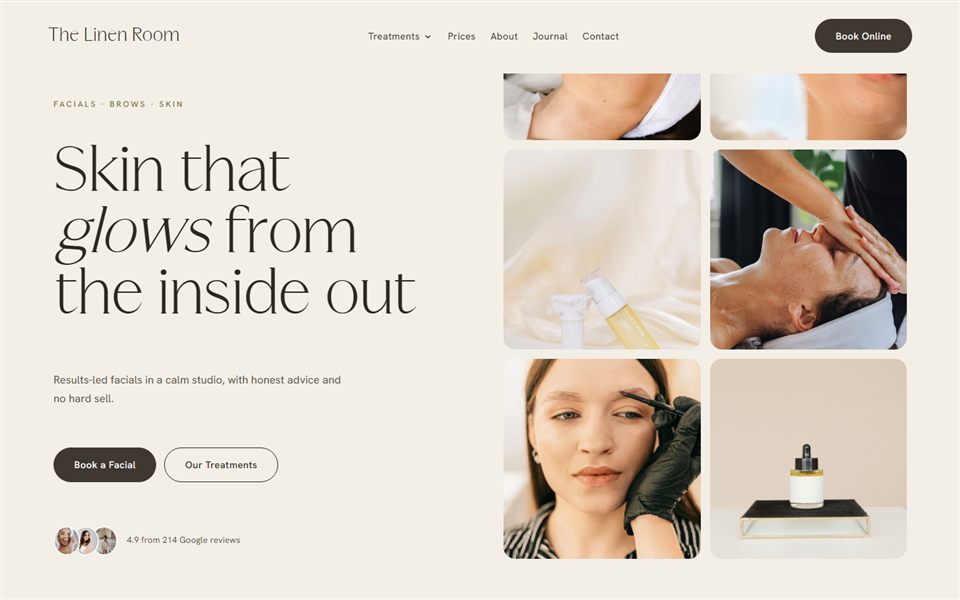
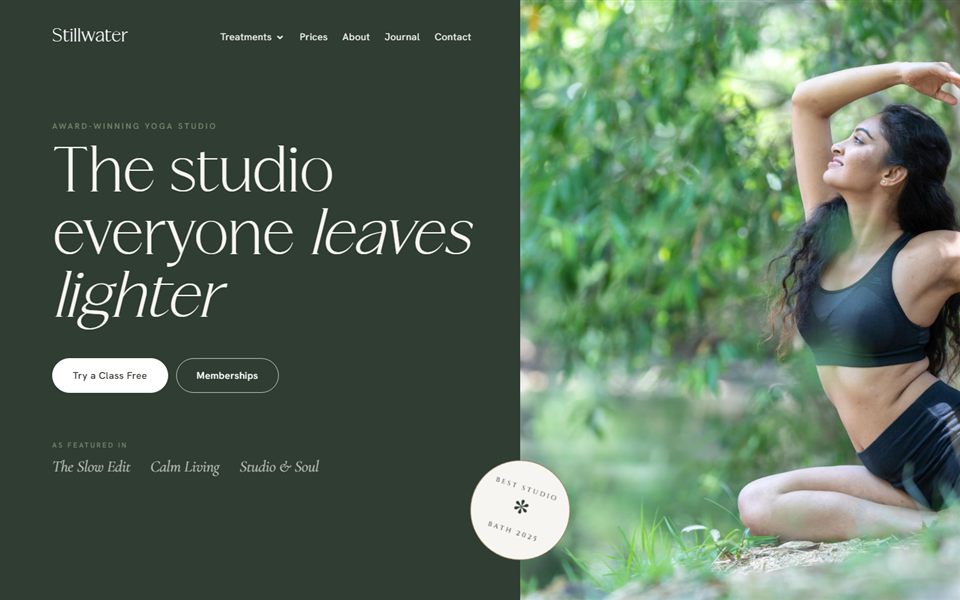
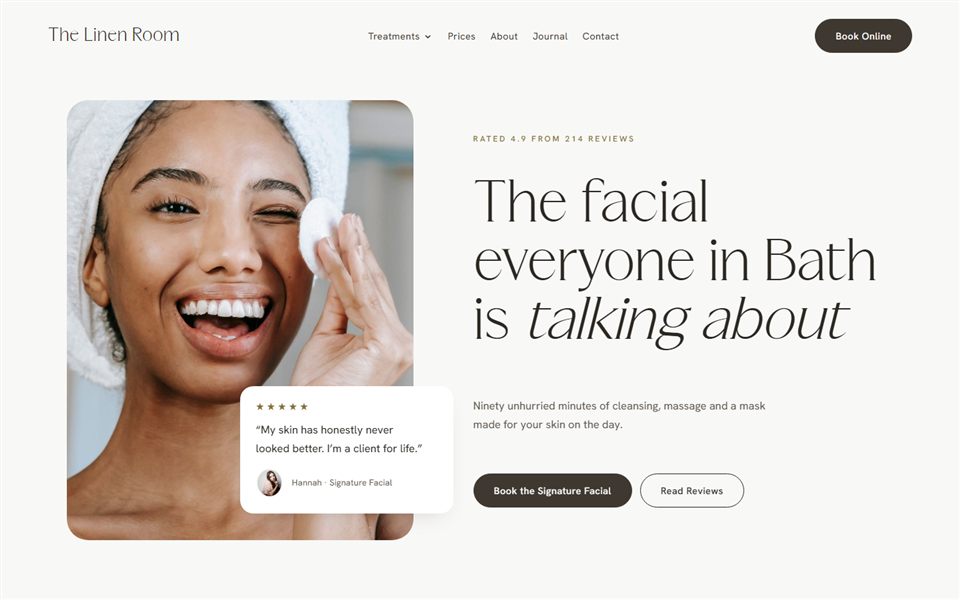
The same platform underneath. The difference is how much is shaped around you.
Why I don’t decide by how established you are
You’ll see templates described as a good fit for people starting out, and bespoke as being for established businesses. That’s a fair shorthand, and it’s how my own pages describe them, but it isn’t how I’d make the decision.
Imagine two made-up businesses. One is a massage therapist who has been working solo for ten years, has a loyal client list and offers four treatments. The other is a brand-new clinic opening with a training academy attached and two very different audiences from day one. The first is very established and might be perfectly served by a well-chosen template. The second is brand new and would probably struggle to squeeze into one.
So instead of asking “am I established enough for bespoke?”, it’s more useful to work through the five questions below.
1. Budget: what can you sensibly spend?
A template costs much less up front because the design work has already been done and is shared across everyone who buys it. On my shop, templates are described as budget-friendly. A bespoke website is a bigger investment because every page is designed and built for you. My bespoke projects are scoped in a proposal and client agreement setting out the scope, timeline, payment schedule and revisions, with a deposit to secure your place in the calendar.
Jade to confirm: template and bespoke prices are not on the site yet, so no figures are given here.
Whichever you choose, remember the ongoing costs, such as hosting, your domain and your Divi licence, which apply to both. My guide to website running costs covers these. A sensible rule is not to spend so much on the website that there’s nothing left for photos, marketing or the business itself.
2. Timeline: how soon do you need it?
A template is built to help you launch quickly. The design is ready, so the main thing setting your pace is how fast you can add your own content and work through the videos. Bespoke takes longer, because there are real stages to go through: getting to know your business, planning the site, designing it, building and testing it across desktop and mobile, and then launching together.
Jade to confirm: typical bespoke timeline (currently “TBC weeks” on the bespoke page).
If you’re opening a new premises or launching a new service on a fixed date, a template can get you live in time, and you can always step up later.
3. How unusual is your business model?
This is the factor I’d weigh most heavily. Templates work best when your business fits a fairly standard shape: a set of treatments or sessions, prices, an about page, reviews and a way to book. Most solo practitioners and many small salons and studios fit that shape well.
Bespoke starts to make sense when your business doesn’t fit neatly, for example:
- You have more than one audience, such as clinic clients and training students, who each need their own path.
- You run several locations, or a large number of services and team members.
- You sell courses, memberships or products alongside treatments.
- Your booking process is complicated, with consultations, forms or different routes for different services.
On the Jazz Beauty project, for example, the clinic and the academy had two very different audiences who needed to find their way quickly, which is the kind of structure a ready-made template isn’t designed for.
4. Content readiness: do you have your words and photos?
This one surprises people. Whichever route you choose, a website is only as good as what goes into it: your photos, your service descriptions, your prices and your story.
With a template, you’ll be adding all of that yourself, and the demo images and text have to be replaced with your own. With bespoke, the design is shaped around your content, so it helps a great deal to have it, or at least a clear plan for it, before the design starts. If you go bespoke with anyone, it’s worth asking up front whether copywriting and photography are included.
Jade to confirm: whether Bloom bespoke projects include copywriting or photography (currently “To be confirmed” on the bespoke page).
If your content isn’t ready, that’s fine, but factor in the time to sort it. The questions to answer before building a website is a good way to start pulling it together.
5. Growth plans: where is the business going?
Think about what your business might look like in two or three years. If you expect to stay much as you are, with a few new treatments here and there, a template will handle that comfortably, because you can add, remove and rearrange pages and sections.
If you’re planning bigger changes, you have choices. With Bloom, you can start with a template and step up to the Bloom Library, a larger, swappable library of sections for adding services, courses and pages as you grow, without starting again. What is the Bloom Library? explains how that works. Or, if the business is going somewhere a template structure can’t follow, bespoke gives you room for more pages, services, locations and integrations.
Template or bespoke: a quick way to decide
A template is probably right if:
- Your services fit a fairly standard shape.
- You want to launch soon and keep costs down.
- You’re happy to follow videos and do the setup yourself, or add paid setup support.
- You have, or can gather, your own photos and words.
Bespoke is probably right if:
- Your business model is unusual, or you serve more than one audience.
- You want a design built entirely around your brand that nobody else has.
- You have the budget and the time for a proper design process.
- You’re growing in a direction a ready-made structure can’t follow.
Something in between might suit you if:
- You like the idea of a template but don’t want to do the setup alone. Paid onboarding and setup support is there for that.
And if you choose a template now, that isn’t a dead end. Plenty of businesses start with something simple and step up when the business is ready. The signs you’ve outgrown your website will tell you when that time comes.
What should you do next?
Score yourself on the five questions: budget, timeline, how unusual your business is, content readiness and growth plans. If most of your answers point to “standard, soon and self-managed”, start with a template. If two or more point towards something unusual or complex, have a conversation about bespoke before you buy anything.
Questions I get asked
Is a template or a custom website better for a small business?
Neither is better in general. A template suits a business with a fairly standard shape that wants to launch sooner and manage its own site. A custom or bespoke site suits a business with an unusual model, more than one audience or a need for a design built entirely around it.
Will my template website look the same as everyone else’s?
The underlying layout can be recognisable, because other businesses can buy the same template. Changing the colours, fonts, photos, words and sections makes a big difference, though, and with your own content it should feel like yours.
Do I need to be an established business to go bespoke?
No. I’d look at your budget, timeline, how unusual your business model is, how ready your content is and your growth plans, rather than how long you’ve been trading.
Can I start with a template and switch to bespoke later?
Yes. With Bloom, you can start with a template and step up to the Bloom Library or a bespoke design as your business grows.
Can I update a bespoke website myself?
With Bloom, yes. Bespoke sites are built on Divi 5 and handed over with training, so you can make the everyday updates your business needs yourself. Templates are designed to be self-managed in the same way.
Written by Jade
Founder of Design With Bloom. Designing elevated websites for beauty and wellness brands, with 10 years in marketing behind every detail.
Keep reading
More from the Bloom Hub
Still weighing it up?
Let’s find the right fit for where you are
Answer four quick questions and I’ll point you to the template, service or bespoke option that suits you. Or book a call and we’ll talk it through properly.