
Bloom Hub / Running Your Business
How to price beauty treatments without guessing
By Jade · October 2026 · 9 min read
Most of the beauty business owners I speak to set their prices the same way. They look at what three or four local salons charge, pick something slightly lower and hope it works out. Learning how to price beauty treatments properly takes an afternoon with a calculator, and it’s the difference between a full diary that pays you and a full diary that wears you out.
In this guide
- Why copying the cheapest salon doesn’t work
- Step 1: Price beauty treatments from your real costs
- A worked example of how to price beauty treatments
- Step 2: Check the local market and decide where you sit
- Pricing when you’re newly qualified
- Courses and packages
- Deposits and no-show fees
- Putting your prices up, and how to tell clients
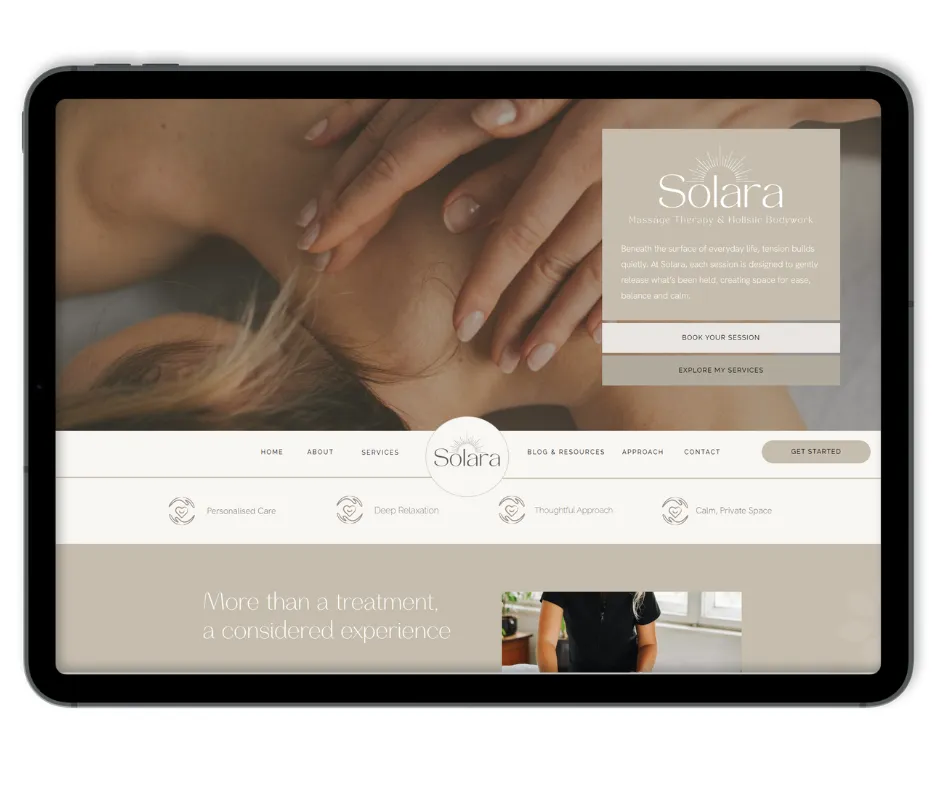
- Presenting your beauty treatment price list on your website
- Questions I get asked
Want a hand with this?
Book a free call and I’ll tell you exactly where I’d start with your business.
This is the method I walk clients through. It starts with your real costs, then looks at your local market and how you want to be seen, and finishes with the practical bits: intro offers, packages, deposits, price rises and how to show it all on your website.
A quick note before the numbers. I’m not an accountant, and the figures below are an example to show the method, not a recommendation for your business. Your own costs and tax position will be different, so check the tax side with an accountant.
Why copying the cheapest salon doesn’t work
When you copy someone else’s prices, you’re also copying their costs, their rent, their hours and their mistakes, without knowing any of them. The salon charging £35 for a full set might have a team of five on low hourly rates. Or they might be quietly going under.
The cheapest price in town also attracts the clients who shop on price. They’re the ones most likely to haggle, no-show and leave the moment someone else is a fiver cheaper. You want people who come back because of you.
Step 1: Price beauty treatments from your real costs
The cost-based method is simple. You add up everything a treatment really costs you, including your own wage, and that gives you the lowest price you can charge without losing money. Then you adjust upwards from there.
You need five numbers:
- Product cost per treatment. Every lash, drop of adhesive, cotton pad, glove and bit of tape. Divide the price of each product by the number of treatments you really get from it, including what you waste.
- Time. The full appointment, including consultation, set-up and clean-down, not only the bit where you’re working.
- Overheads per hour. Your monthly running costs divided by the number of hours you realistically have clients in your chair. Use the hours you actually fill, not the hours you’re open, or every treatment will be underpriced.
- Your wage. What you want to pay yourself per hour.
- Tax and National Insurance. Money set aside so your Self Assessment bill doesn’t knock you sideways. Gov.uk has the current self-employed National Insurance rates, and an accountant can give you a proper percentage to put aside. Once your bill reaches £1,000, HMRC adds payments on account for next year, so first bills are often bigger than expected.
On top of that you add a margin, which covers holidays, sick days, quiet weeks in January and money to reinvest in training. When you’re self-employed nobody pays you to be on holiday, and the margin is taxable profit too, so don’t make it too thin.
A worked example of how to price beauty treatments
Let’s take a lash tech working from a home treatment room in Nottingham. These are made-up but realistic numbers to show how it works.
Her monthly overheads
- Insurance: £20
- Booking system: £35
- Accountant: £40
- Website, domain and email: £20
- Marketing and ads: £60
- Laundry, disposables and cleaning: £25
- Her share of heating and electricity: £30
- Training and equipment replacement fund: £50
That’s £280 a month. She works around four days a week but, once you take out admin, content and gaps between clients, she has about 80 hours a month of actual appointments. So her overheads are £280 ÷ 80 = £3.50 per hour.
The full set
Her classic full set takes two hours from the client walking in to her room being reset.
- Products: £6
- Overheads: 2 hours × £3.50 = £7
- Her wage: 2 hours × £20 = £40
- Tax and NI buffer (she sets aside 25% of her wage, as advised by her accountant): £10
Total: £63. That’s her floor. Charge less than that and she’s paying for the privilege of working.
Add a 20% margin for holidays, quiet weeks, reinvestment and the tax on that margin: £63 × 1.2 = £75.60. She rounds it to £75.
The infill
Now do the same for a one-hour infill: £3 in products, £3.50 overheads, £20 wage and £5 tax buffer comes to £31.50, or about £38 with margin. I see so many lash techs charging £25 for infills, which is fine for a while, until they realise their regulars are the clients losing them money.
Sense-check the year
Before you trust the numbers, scale them up. Eighty hours a month at £20 is £1,600 a month, or £19,200 a year before tax, plus whatever the margin leaves after holidays. If that isn’t a living for you, the wage figure is too low, and it’s far better to find that out on a spreadsheet than in your second year.
Then compare treatments by what they earn per hour of your time, not by price. Her full set brings in £37.50 an hour and her infill £38. If a one-hour lash lift with £4 of product sells at £45, that’s the treatment to promote when the diary has gaps. Do this for every treatment on your menu. It’s a bit tedious the first time, and a simple spreadsheet makes it quick to update when your supplier puts prices up.
Step 2: Check the local market and decide where you sit
Your cost-based price tells you the minimum. The market tells you what’s possible.
Search for your treatment and your town on Google and on the booking apps, and note eight to ten local businesses. For each one, look at the price, how long the appointment is, how many reviews they have, the quality of their photos and how their website feels. You’ll start to see bands: the budget options, the solid middle, and the people charging noticeably more and still fully booked. Check how far ahead those top-band businesses are booked, because that tells you where demand really sits.
Then decide honestly where you belong. Things that justify sitting higher:
- Specialist training or years of experience in that treatment
- A strong portfolio and plenty of genuine reviews
- A calm, private, beautifully kept space
- A niche, such as lashes for sensitive eyes or brows for mature clients
- A booking and aftercare experience that feels looked after
If your cost-based price comes out higher than the local going rate, don’t panic and drop it. Look at what you can add or show so clients can see why you’re worth it. Your photos, reviews and website do a lot of that work for you. If yours doesn’t, have a read of the signs your business has outgrown its website.
Pricing when you’re newly qualified
You do need practice and you do need reviews, so a lower price at the start is reasonable. The trick is making it clearly temporary, so you don’t train your first clients to expect bargain prices forever.
- Set your proper price first, using the method above.
- Offer an introductory price for a set number of clients or until a specific date, and say so. “Founding client price, available for my first 20 clients” is honest and creates a bit of urgency.
- Show the full price next to the intro price, and make sure it genuinely goes up when you said. An intro price that never ends risks being a misleading price claim.
- Ask intro clients for photo permission, and for a review like any other client, but never make the price conditional on one. Google removes incentivised reviews, and the CMA’s fake reviews rules require them to be clearly disclosed.
Avoid calling it “cheap” or “practice” prices. You’re qualified and insured. You’re just early in your career. There’s more on this in my guide to getting your first clients when you’re newly qualified.
Courses and packages
Some treatments work best as a course, like skin peels, microneedling, laser or a run of facials. Selling them as a package helps clients get results and gives you more predictable income.
Keep packages simple:
- Base the package on your single treatment price, then offer a modest saving or an extra session, such as six for the price of five.
- Take payment upfront or in a couple of fixed instalments, and keep a record of sessions still owed, because that money is a promise of future appointments, not spare cash.
- Write clear terms: how long the sessions can be used over, what happens if they need to pause, and your refund policy. Under the Consumer Rights Act 2015 terms have to be fair, so an expiry date needs to give a realistic window to finish the course, and refunds for unused sessions are the safer default.
- Don’t discount so heavily that each session drops below your floor price.
- Honour the price paid if you put prices up mid-course.
For maintenance treatments like infills, you can price by the gap rather than a package. For example, infills within two weeks at one price and within three weeks at a slightly higher price, with anything longer treated as a new set.
Deposits and no-show fees
A deposit is part of your pricing, not an add-on. Every no-show is an hour or two of wages you’ll never get back, and a home-based business feels that more than most.
Take a deposit at booking, either a fixed amount or a percentage of the treatment, and take it off the final price on the day. Keep it proportionate to what a late cancellation actually costs you, because a deposit you keep has to be a fair term. Set out in your policy what happens to it if someone cancels late or doesn’t turn up, and put that policy on your booking page, confirmation email and website. Most online booking systems will handle deposits and card details for you, so you don’t have to chase anyone.
Putting your prices up, and how to tell clients
Your costs go up every year, so your prices need to as well. A small rise once a year is far easier for clients than a big jump after three years of holding back. Other good moments are after advanced training, when you’re consistently booked several weeks ahead, or when a supplier changes their prices.
Give your regulars a few weeks’ notice and keep the message short and confident. No long apology. Something like:
Hi lovely, a quick heads up that my prices are changing from 1st March. Full sets will be £75 and infills £38. Any appointments already booked before then stay at the current price. Thank you so much for your support, I can’t wait to see you at your next appointment.
Send it by text or email to existing clients, update your booking system and website on the same day, and pop it in your Instagram stories. Most clients won’t blink. The few who leave over a few pounds were usually the ones booking purely on price anyway. Watch your rebooking rate for the next couple of months, so you know how the rise has actually landed rather than guessing.
Presenting your beauty treatment price list on your website
Your price list is one of the most visited pages on any beauty website, and one of the most badly designed. If someone has to DM you to ask how much something costs, a fair number won’t bother.
- Show your prices. Hiding them makes people assume you’re expensive, or not confident in your pricing.
- Use “from” prices honestly. If a treatment genuinely varies, such as lash extensions by style or aesthetics by area, show a starting price and explain what changes it. The ASA expects a meaningful share of clients to actually be able to get a “from” price (its pricing advice covers this), so don’t put “from £40” if almost everyone pays £70.
- Include every compulsory charge. Since April 2025 drip pricing is banned, so any booking or admin fee a client can’t avoid must be in the price you show, not added at checkout.
- Include durations. Clients plan around their lunch breaks and school runs, so tell them how long they’ll be with you.
- Group treatments clearly, by category rather than one long list, with a sentence on what each one involves and who it suits.
- Add patch test and deposit notes right beside the treatments they apply to.
- Link each treatment to booking, so nobody has to hunt for the button.
Keep it in sync with your booking system. Clients finding one price online and another at checkout is a quick way to lose trust.
If you’d like help looking at your whole menu, including which treatments actually make you money, it’s something I look at in business design. And if you’re still at the very start, my guide to starting a beauty business from home covers everything else you need to set up.
Questions I get asked
How much should I charge for beauty treatments as a beginner?
Work out your cost-based price first, so you know your floor. Then offer an introductory price for a limited number of clients or a set period, show your full price alongside it, and make sure it really ends when you said. That way you build a client base without getting stuck at a price you can’t live on.
How do I work out how much to charge for a treatment?
Add your product cost, your overheads per hour multiplied by the appointment length, your hourly wage for that time and a tax buffer. Then add a margin for holidays and quiet weeks. Sense-check what that adds up to over a year, compare it with local prices and adjust for your experience and positioning.
How often should a salon put its prices up?
Many beauty businesses review prices once a year, which keeps rises small and easy for clients to accept. It also makes sense after extra training or when you’re booked well ahead. Give existing clients a few weeks’ notice and honour prices already paid for packages.
Should I put my prices on my website?
Yes. Clients expect to see prices before they book, and hiding them usually means more DMs and fewer bookings. Use honest “from” prices where a treatment varies, include any compulsory fees in the price, and say how long each appointment takes.
Do I need to charge VAT on beauty treatments?
Only once you’re VAT registered, which you must be when your taxable turnover over the last 12 months goes over the VAT registration threshold, currently £90,000, or you expect to go over it in the next 30 days alone. Beauty treatments are charged at the standard rate, and prices you show consumers must include VAT, so if you’re getting close, speak to an accountant early and plan how your prices will change.

Written by Jade
Founder of Design With Bloom. Designing elevated websites for beauty and wellness brands, with 10 years in marketing behind every detail.
Keep reading
More from the Bloom Hub
Know your worth
Ready to bloom?
Your prices deserve a website that shows clients exactly why you’re worth them. Find a template that fits, or let’s build something that’s entirely yours.